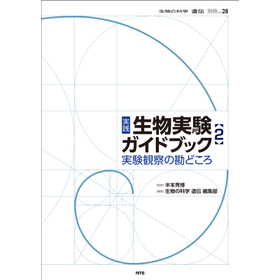
Key points of experimental observation
◇The definitive second edition of the highly praised "Biological Experiment Book" is here!
◇It includes all the serialized columns published from 2021 to 2025.
◇In the Special Column, experts explain topics such as "Earth Environment and Algal Bio" and "Genome Literacy and Educational Materials."
◇Visual pages feature "Formation of Fertilization Membrane and Development in Sea Urchins," "Morphological Changes in Meiosis Chromosomes," and "Observing Day 3 Chick Embryos"!
【Part I】Exploring the Transition from "Observation of Living Things" to "Inquiry"
The spore discharge movement of Tsukushi (the spore stalk of Equisetum)
Development of Sea Urchins—Confirming fertilization, cleavage, and larval stages in the laboratory
Observation of Chicken Embryo Disks and Embryos—Connecting to the understanding of human development
Innovative observation methods for Paramecium: "Stopping movement with edible film"
【Part II】Key Points for Experiments and Observations
【Cells】Simple observation methods for mitochondria that can be used in class—among others.
【Genes and DNA】Key points and innovations in recombinant DNA experiments—among others.
【Development and Morphogenesis】Advantages and applications of developmental experiments using Pacific oysters—among others.
【Tissues and Organs】Innovative methods for observing the tissues of diverse herbaceous plant leaves and flowers—among others.
【Part III】Observing the Outdoors (Natural World)